
купить 3-MeO-PCE онлайн | Оптом 3-MeO-PCE
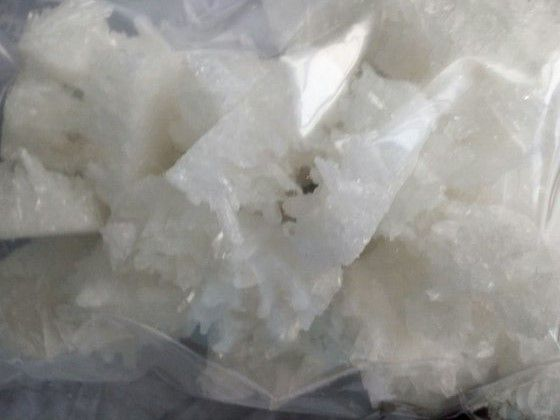
Купить 3-MeO-PCE онлайн, (3-метоксиэтициклидин) — новое дизайнерское вещество класса диссоциативов арилциклогексиламина, вызывающее галлюцинации. 3-MeO-PCE является структурным аналогом PCE и 3-MeO-PCP и оказывает схожее воздействие на организм грызунов в ходе исследований.
Цена:
3-MeO-PCE 10 г 179 $ Добавить в корзину
3-MeO-PCE 100 г 990 $ Добавить в корзину Бесплатная доставка!
3-MeO-PCE 500 г 2690 $ Добавить в корзину Бесплатная доставка!
3-MeO-PCE 1 кг 3590 $ Добавить в корзину Бесплатная доставка!
Вы можете купить 3-MeO-PCE сейчас онлайн на Chemsaxis.
Купить 3-MeO-PCE онлайн на chems axis, который является дизайнерским наркотиком, предназначенным для исследований и судебной экспертизы. 3-MeO-PCE производится в современной фармацевтической лаборатории с соблюдением всех стандартов качества.
Условия хранения: в прохладном и сухом месте,
хранение до 2 лет.
| Синонимы | 3-MeO-PCE 3-метокси этициклидин |
|---|---|
| ИЮПАК | N-этил-1-(3-метоксифенил)-циклогексанамин гидрохлорид |
| Формула | C15H23NO • HCl |
| Молекулярная масса | 269.8 |
| КАС | 1797121-52-8 |
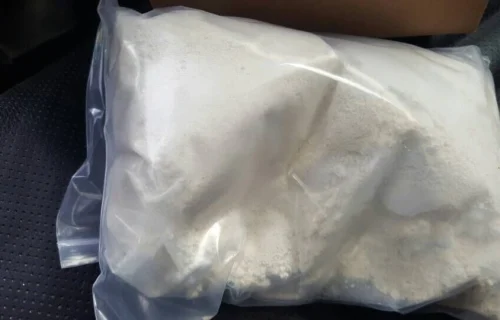
| Внешность | порошок |
| Чистота | > 99 % |
- Выберите ваши любимые продукты от Chemsaxis, и вам гарантировано превосходное качество по лучшей цене.
-Конверты отправляются через 24 часа после оплаты.
Срок доставки — 3–4 рабочих дня.
Скорость доставки 100% по всей Европе.
Вы должны знать правовой статус продукта, который вы заказываете в вашей стране.
-При заказе на нашем сайте от 250 долларов США доставка за наш счет. При оформлении заказа на сумму от $ 250 менеджер автоматически исключает стоимость доставки.
- Химический классДиссоциативный анестетик
- Название по ИЮПАКГидрохлорид N-этил-1-(3-метоксифенил)циклогексанамина
- Номер CAS: 1797121-52-8
- Молекулярная формула: C15H23NO·ClH
Методы
Синтез 3-метокси-PCE обычно включает реакцию 3-метоксифенилацетонитрила с этиламином в присутствии восстановителя. Этот процесс может быть адаптирован для использования в криминалистических лабораториях и химиками, работающими на сером рынке.
Технические детали
Оригинальный синтез, описанный Женестом и др., был оптимизирован для получения 3-метокси-PCE в течение нескольких дней с использованием стандартных лабораторных реактивов и растворителей для высокоэффективной жидкостной хроматографии. Модифицированные методы включают различные стадии очистки для обеспечения высокого выхода и степени чистоты, пригодных для исследовательских применений. .
Структура
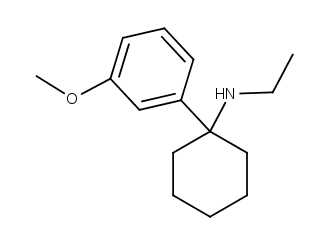
Молекулярная структура 3-метокси PCE представляет собой циклогексановое кольцо, замещенное этиламинной и метоксифенильной группами. Эта конфигурация имеет решающее значение для его фармакологической активности.
Данные
- Молекулярная масса: 269.81 г/моль
- Точка плавления: Приблизительно 204 °C
- Точка кипения: Примерно 381 °C
Структурная формула может быть выражена следующим образом:
Реакции
3-Метокси-PCE претерпевает различные химические реакции, типичные для аминов и простых эфиров, включая окисление и гидролиз. Реакционная способность соединения может быть обусловлена наличием метоксигруппы, которая может участвовать в реакциях электрофильного ароматического замещения.
Технические детали
Аналитические методы, такие как жидкостная хроматография в сочетании с масс-спектрометрией, применялись для изучения метаболитов, образующихся в результате метаболизма 3-метокси PCE. В ходе этих исследований было идентифицировано несколько метаболитов I и II фаз, образующихся в результате процессов гидроксилирования, O-деметилирования и глюкуронизации. .
Процесс
Механизм действия 3-метокси-PCE в первую очередь связан с антагонизмом в отношении N-метил-D-аспартатных рецепторов в центральной нервной системе. Это действие приводит к диссоциативным эффектам, аналогичным тем, которые наблюдаются при применении других соединений, таких как фенциклидин и кетамин.
Данные
Фармакологические исследования показывают, что 3-метокси-PCE обладает значительным сродством связывания с NMDA-рецепторами, при этом сообщается о Ки значение, указывающее на его эффективность в ингибировании активности рецептора . Additionally, it interacts with serotonin transporters, contributing to its psychoactive effects.
Physical Properties
Chemical Properties
- Stability: Generally stable under standard laboratory conditions.
- Реактивность: Reacts with strong oxidizing agents; care should be taken during handling.
Relevant analyses have shown that 3-methoxy pce maintains its integrity under various conditions typical for laboratory environments .
Scientific Uses
3-Methoxy pce is primarily used in research settings to explore its pharmacological properties and potential therapeutic applications. Its role as a dissociative anesthetic makes it a candidate for studies related to pain management and mental health disorders.
Additionally, its structural similarity to other psychoactive compounds makes it valuable for understanding the mechanisms underlying dissociation and anesthetic effects in clinical settings .
Structural Elucidation and Isomeric Differentiation
Comparative Analysis with Arylcyclohexylamine Derivatives
3-Methoxy-PCE hydrochloride (C₁₅H₂₄ClNO; CAS 1797121-52-8) belongs to the arylcyclohexylamine class, sharing core structural motifs with established dissociative anesthetics while exhibiting distinct substitutions that define its pharmacological profile. Its molecular architecture comprises a cyclohexyl ring bridged to a nitrogen-containing ethylamino group (‑NCH₂CH₃) and a 3-methoxyphenyl aromatic system [2] [4]. This configuration differs critically from several key analogues:
- Phencyclidine (PCP): Features a piperidine ring instead of the ethylamino group. The piperidine nitrogen is incorporated into a heterocyclic structure (‑N< within a six-membered ring), increasing steric bulk and altering receptor engagement kinetics compared to 3-MeO-PCE’s flexible ethyl chain [5].
- Кетамин: Possesses an ortho-chlorinated phenyl ring and a β-keto group adjacent (alpha) to the cyclohexylamine nitrogen. The β-keto moiety significantly influences hydrogen bonding potential and metabolic pathways, absent in 3-MeO-PCE [5] .
- 3-MeO-PCP: Shares the meta-methoxy phenyl substitution but incorporates a piperidine ring analogous to PCP, contrasting with 3-MeO-PCE’s N-ethyl group. This difference impacts lipophilicity and NMDA receptor binding kinetics [5].
The N-ethyl moiety in 3-MeO-PCE reduces steric hindrance near the nitrogen atom compared to the constrained piperidine in PCP/3-MeO-PCP, potentially enhancing conformational flexibility and receptor interaction dynamics. Simultaneously, the meta-methoxy (‑OCH₃) group on the phenyl ring is a strong electron-donating substituent, influencing the aromatic ring’s electron density and its interaction with hydrophobic receptor pockets. This substitution pattern is a key determinant of its receptor affinity profile among arylcyclohexylamines [1] [5].
Table 1: Structural Comparison of Key Arylcyclohexylamines
| Compound | Aromatic Ring Substitution | Amino Group | Cyclohexyl Modification | Molecular Formula (Base/HCl) |
|---|---|---|---|---|
| 3-MeO-PCE (HCl) | 3-methoxy (meta-OCH₃) | -N(H)CH₂CH₃ | None | C₁₅H₂₃NO / C₁₅H₂₄ClNO |
| ФПЦ | None | Piperidine (‑N< ring) | None | C₁₇H₂₅N |
| Кетамин | 2-chloro (ortho-Cl) | -N(CH₃)CH₃ (Dimethyl) | β-Keto group | C₁₃H₁₆ClNO |
| 3-MeO-PCP | 3-methoxy (meta-OCH₃) | Piperidine (‑N< ring) | None | C₁₈H₂₇NO |
Positional Isomer Discrimination: 3-MeO-PCE vs. 4-MeO-PCE
Positional isomerism within methoxy-substituted arylcyclohexylamines significantly influences pharmacological activity. The meta (3-) versus para (4-) positioning of the methoxy group on the phenyl ring alters electronic distribution, molecular dipole, and steric presentation during receptor binding.
3-MeO-PCE exhibits the oxygen atom of its methoxy group projecting towards the amino-cyclohexyl moiety. This positioning creates a distinct electronic profile where the electron-donating resonance effect of the methoxy group is partially suppressed compared to the para isomer. In contrast, the 4-MeO-PCE isomer (methoxy group opposite the attachment point to the cyclohexyl ring) allows for maximal resonance donation into the phenyl ring system. This difference profoundly impacts NMDA receptor affinity:
- Receptor Affinity: 3-MeO-PCE demonstrates a significantly higher affinity for the NMDA receptor (PCP binding site; pKᵢ ~7.22, Kᵢ ~61 nM) compared to 4-MeO-PCE [5] [6]. This enhanced affinity is attributed to optimal steric and electronic complementarity within the receptor’s binding pocket afforded by the meta substitution.
- Analytical Discrimination: Techniques like UPLC-HRMS and GC-MS readily differentiate these isomers based on retention times and characteristic fragment ions. Key fragmentation pathways involve cleavage of the bond between the cyclohexyl ring and the amino nitrogen, and loss of the methoxy group or ethylene from the N-ethyl chain, yielding patterns whose relative intensities differ subtly between isomers [5].
The meta position in 3-MeO-PCE is thus pharmacologically privileged over the para position for NMDA receptor antagonism within the PCE structural framework.
Table 2: Positional Isomer Comparison: 3-MeO-PCE vs. 4-MeO-PCE
| Собственность | 3-MeO-PCE | 4-MeO-PCE | Significance |
|---|---|---|---|
| Methoxy Position | Meta (position 3) | Para (position 4) | Alters electron density distribution & dipole moment. |
| NMDA Receptor Affinity (Kᵢ) | ~61 nM [5] [6] | Lower than 3-MeO-PCE | 3-MeO-PCE is a more potent NMDA antagonist. |
| σ1 Receptor Affinity (Kᵢ) | ~4519 nM [5] | Not Well Characterized | Negligible affinity for 3-MeO-PCE. |
| SERT Affinity (Kᵢ) | ~115 nM [5] | Not Well Characterized | Moderate affinity suggests potential secondary activity. |
Physicochemical Properties
Hydrochloride Salt Stability and Bioavailability
The hydrochloride (HCl) salt form of 3-MeO-PCE is the predominant and most stable formulation encountered. The ionic bond formed between the basic secondary amine nitrogen (‑NH‑) of the 3-MeO-PCE freebase and hydrochloric acid creates a crystalline, typically white to off-white solid [2] [4]. This salt formation confers critical advantages:
- Enhanced Stability: The ionic crystalline lattice significantly reduces volatility and susceptibility to oxidative degradation compared to the freebase oil. This improves shelf life and facilitates handling and storage. The recommended storage condition is at room temperature or below, protected from excessive moisture and light [2] [4].
- Improved Water Solubility: While inherently lipophilic, salt formation dramatically increases water solubility relative to the freebase. This ionization is crucial for dissolution in biological aqueous environments (e.g., gastrointestinal fluid, blood plasma), a prerequisite for systemic bioavailability after oral or insufflated administration [2] [4]. The protonated amine (‑NH₂⁺‑) facilitates hydration and interaction with polar solvent molecules.
- Bioavailability Implications: The hydrochloride salt ensures rapid dissolution and absorption across mucous membranes. Once absorbed, the compound’s ability to cross the blood-brain barrier (BBB) is governed by its partition coefficient and plasma protein binding. The moderate lipophilicity of the molecule, even in its protonated form, allows sufficient passive diffusion through lipid membranes for CNS activity. The salt form itself dissociates readily in physiological pH, releasing the freebase or mono-protonated species that can permeate the BBB [2] [4].
Solubility and Partition Coefficients
The physicochemical behavior of 3-MeO-PCE hydrochloride in different solvents is defined by its polar ionic group and the large hydrophobic domains (cyclohexyl and methoxyphenyl rings).
- Solubility:
- Water: Moderately soluble due to the ionic nature of the hydrochloride salt. Exact quantitative solubility data in pure water is limited in the literature, but it is sufficient for dissolution in biological fluids.
- Methanol/ Ethanol: Highly soluble. Solutions at 1.0 mg/mL (as freebase equivalent) in methanol are commercially available as analytical standards, indicating good solubility [4].
- Organic Solvents (e.g., Chloroform, Ethyl Acetate): The freebase form is soluble, but the hydrochloride salt has significantly lower solubility in non-polar or weakly polar organic solvents due to its ionic character [4].
- Partition Coefficient (Log P): The Log P (octanol-water partition coefficient) is a critical parameter predicting membrane permeability and distribution. While experimental Log P values for 3-MeO-PCE HCl are scarce, calculated values (cLog P) for the freebase form are estimated around ~3.5-4.0, indicating significant lipophilicity. The hydrochloride salt exhibits a lower apparent Log D (distribution coefficient at physiological pH ~7.4) due to ionization. A substantial fraction of the molecule exists in the charged, hydrophilic form at pH 7.4, reducing its effective lipophilicity compared to the freebase. Nevertheless, sufficient unionized molecules exist (governed by its pKa) to allow passive diffusion through lipid bilayers, explaining its CNS penetration. The meta-methoxy group contributes favorably to lipophilicity compared to unsubstituted PCE [4] [5].
Table 3: Key Physicochemical Properties of 3-MeO-PCE Hydrochloride
| Собственность | Value / Characteristic | Notes/Significance |
|---|---|---|
| Молекулярная формула | C₁₅H₂₄ClNO | Confirmed via HRMS, elemental analysis [1] [4]. |
| Молекулярная масса | 269.81 g/mol | [1] [4]. |
| Номер CAS | 1797121-52-8 | Unique identifier [2] [4]. |
| Внешность | White to off-white crystalline solid | Typical for hydrochloride salts [2] [4]. |
| Точка плавления | Not definitively published (Analog: 3-MeO-PCP HCl ~204-205°C) | High melting point consistent with ionic solid. |
| Water Solubility | Moderate (HCl salt) | Sufficient for biological dissolution. Freebase: Low. |
| Solubility in Methanol | High (≥ 1 mg/mL) | Used for analytical standard solutions [4]. |
| Estimated logP (Freebase) | ~3.5-4.0 (Calculated) | Indicates moderate-high lipophilicity. |
| Estimated logD₇.₄ (HCl) | < logP (Freebase) | Ionization reduces apparent lipophilicity at physiological pH. |
| pKa (Amine) | Estimated ~8.5-9.5 (Typical for secondary alkyl amines) | Governs ionization state and partitioning. |
| Storage Conditions | Room Temp. or below; protected from moisture & light | Standard for stable hydrochloride salts [2] [4]. |

 English
  Dutch
Dutch  German
  Chinese
  Italian
  Spanish
  Portuguese
  Russian
  French