購買 3-MeO-PCE 線上 | 批發 3-MeO-PCE
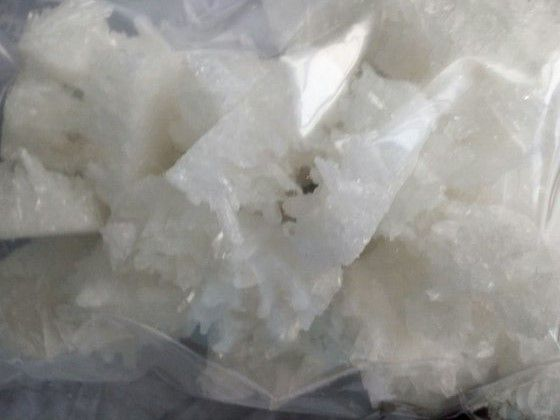
Buy 3-MeO-PCE online, (3-Methoxyeticyclidine) is a new designer substance of the dissociative class arylcyclohexylamine, which causes hallucinations. 3-MeO-PCE is a structural analogue of PCE and 3-MeO-PCP and has a similar effect on rodent organisms in studies.
價格:
3-MeO-PCE 10g 179 $ 加入購物車
3-MeO-PCE 100g 990 $ 加入購物車 免費運送!
3-MeO-PCE 500g 2690 $ 加入購物車 免費運送!
3-MeO-PCE 1 kg 3590 $ 加入購物車 免費運送!
您可以購買 3-MeO-PCE online right now at Chemsaxis.
Buy 3-MeO-PCE online from chems axis which 是一種旨在用於研究和法醫分析的新型精神活性物質。. 3-MeO-PCE 是在符合所有質量標準的現代製藥實驗室中生產的。.
儲存條件:存放於陰涼乾燥處,,
可儲存長達 2 年。.
| 同義詞 | 3-MeO-PCE 3-methoxy Eticyclidine |
|---|---|
| 國際純化學與應用化學聯合會 | N-ethyl-1-(3-methoxyphenyl)-cyclohexanamine, monohydrochloride |
| 公式 | C15H23NO • HCl |
| 分子量 | 269.8 |
| CAS | 1797121-52-8 |
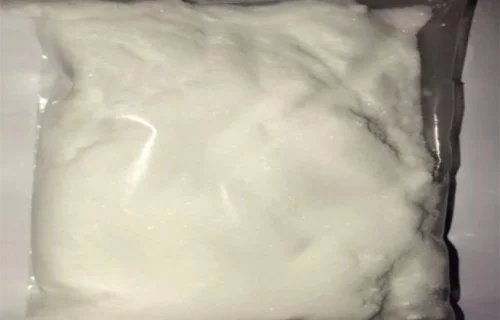
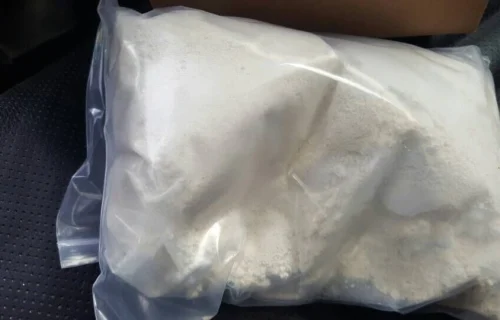
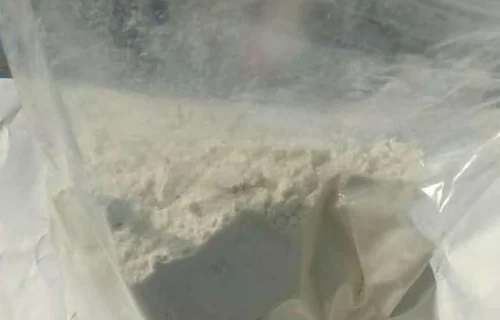
| 外觀 | 粉末 |
| 純度 | > 99 % |
-選擇您最喜愛的 Chemsaxis 產品,保證以最優惠的價格獲得卓越的品質。.
-信封會在付款後 24 小時內寄出。.
送達時間為 3 至 4 個工作天。.
100% 配送服務遍及全歐洲。.
-您必須了解您訂購的產品在您所在國家/地區的法律地位。.
-在我們的網站上訂購滿 250 美元,即可享受免運費優惠。. 透過 $ 250 下單時,系統會自動扣除運費。.
- 化學類別: Dissociative anesthetic
- IUPAC Name: N-ethyl-1-(3-methoxyphenyl)cyclohexanamine hydrochloride
- 化學品摘要號碼: 1797121-52-8
- 分子式: C15H23NO·ClH
Methods
The synthesis of 3-methoxy pce typically involves the reaction of 3-methoxyphenylacetonitrile with ethylamine in the presence of a reducing agent. The process can be adapted for use in forensic laboratories and by chemists involved in the gray market.
Technical Details
The original synthesis described by Geneste et al. has been optimized to allow the production of 3-methoxy pce within a few days using standard laboratory reagents and high-performance liquid chromatography grade solvents. The modified methods include various purification steps to ensure high yields and purity levels suitable for research applications .
Structure
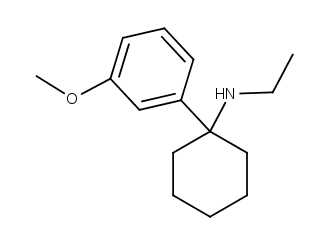
The molecular structure of 3-methoxy pce features a cyclohexane ring substituted with an ethylamine group and a methoxyphenyl group. This configuration is crucial for its pharmacological activity.
Data
- 分子量: 269.81 g/mol
- Melting Point: Approximately 204 °C
- Boiling Point: Approximately 381 °C
The structural formula can be expressed as follows:
Reactions
3-Methoxy pce undergoes various chemical reactions typical of amines and ethers, including oxidation and hydrolysis. The compound’s reactivity can be attributed to the presence of the methoxy group, which can participate in electrophilic aromatic substitution reactions.
Technical Details
Analytical methods such as liquid chromatography coupled with mass spectrometry have been employed to study the metabolites produced from the metabolism of 3-methoxy pce. These studies have identified several phase I and phase II metabolites resulting from hydroxylation, O-demethylation, and glucuronidation processes .
Process
The mechanism of action of 3-methoxy pce primarily involves antagonism at the N-methyl-D-aspartate receptor in the central nervous system. This action leads to dissociative effects similar to those observed with other compounds like phencyclidine and ketamine.
Data
Pharmacological studies indicate that 3-methoxy pce exhibits significant binding affinity at NMDA receptors, with a reported Ki value indicating its potency in inhibiting receptor activity . Additionally, it interacts with serotonin transporters, contributing to its psychoactive effects.
Physical Properties
Chemical Properties
- Stability: Generally stable under standard laboratory conditions.
- 反應性: Reacts with strong oxidizing agents; care should be taken during handling.
Relevant analyses have shown that 3-methoxy pce maintains its integrity under various conditions typical for laboratory environments .
Scientific Uses
3-Methoxy pce is primarily used in research settings to explore its pharmacological properties and potential therapeutic applications. Its role as a dissociative anesthetic makes it a candidate for studies related to pain management and mental health disorders.
Additionally, its structural similarity to other psychoactive compounds makes it valuable for understanding the mechanisms underlying dissociation and anesthetic effects in clinical settings .
Structural Elucidation and Isomeric Differentiation
Comparative Analysis with Arylcyclohexylamine Derivatives
3-Methoxy-PCE hydrochloride (C₁₅H₂₄ClNO; CAS 1797121-52-8) belongs to the arylcyclohexylamine class, sharing core structural motifs with established dissociative anesthetics while exhibiting distinct substitutions that define its pharmacological profile. Its molecular architecture comprises a cyclohexyl ring bridged to a nitrogen-containing ethylamino group (‑NCH₂CH₃) and a 3-methoxyphenyl aromatic system [2] [4]. This configuration differs critically from several key analogues:
- Phencyclidine (PCP): Features a piperidine ring instead of the ethylamino group. The piperidine nitrogen is incorporated into a heterocyclic structure (‑N< within a six-membered ring), increasing steric bulk and altering receptor engagement kinetics compared to 3-MeO-PCE’s flexible ethyl chain [5].
- Ketamine: Possesses an ortho-chlorinated phenyl ring and a β-keto group adjacent (alpha) to the cyclohexylamine nitrogen. The β-keto moiety significantly influences hydrogen bonding potential and metabolic pathways, absent in 3-MeO-PCE [5] .
- 3-MeO-PCP: Shares the meta-methoxy phenyl substitution but incorporates a piperidine ring analogous to PCP, contrasting with 3-MeO-PCE’s N-ethyl group. This difference impacts lipophilicity and NMDA receptor binding kinetics [5].
The N-ethyl moiety in 3-MeO-PCE reduces steric hindrance near the nitrogen atom compared to the constrained piperidine in PCP/3-MeO-PCP, potentially enhancing conformational flexibility and receptor interaction dynamics. Simultaneously, the meta-methoxy (‑OCH₃) group on the phenyl ring is a strong electron-donating substituent, influencing the aromatic ring’s electron density and its interaction with hydrophobic receptor pockets. This substitution pattern is a key determinant of its receptor affinity profile among arylcyclohexylamines [1] [5].
Table 1: Structural Comparison of Key Arylcyclohexylamines
| Compound | Aromatic Ring Substitution | Amino Group | Cyclohexyl Modification | Molecular Formula (Base/HCl) |
|---|---|---|---|---|
| 3-MeO-PCE (HCl) | 3-methoxy (meta-OCH₃) | -N(H)CH₂CH₃ | None | C₁₅H₂₃NO / C₁₅H₂₄ClNO |
| PCP | None | Piperidine (‑N< ring) | None | C₁₇H₂₅N |
| Ketamine | 2-chloro (ortho-Cl) | -N(CH₃)CH₃ (Dimethyl) | β-Keto group | C₁₃H₁₆ClNO |
| 3-MeO-PCP | 3-methoxy (meta-OCH₃) | Piperidine (‑N< ring) | None | C₁₈H₂₇NO |
Positional Isomer Discrimination: 3-MeO-PCE vs. 4-MeO-PCE
Positional isomerism within methoxy-substituted arylcyclohexylamines significantly influences pharmacological activity. The meta (3-) versus para (4-) positioning of the methoxy group on the phenyl ring alters electronic distribution, molecular dipole, and steric presentation during receptor binding.
3-MeO-PCE exhibits the oxygen atom of its methoxy group projecting towards the amino-cyclohexyl moiety. This positioning creates a distinct electronic profile where the electron-donating resonance effect of the methoxy group is partially suppressed compared to the para isomer. In contrast, the 4-MeO-PCE isomer (methoxy group opposite the attachment point to the cyclohexyl ring) allows for maximal resonance donation into the phenyl ring system. This difference profoundly impacts NMDA receptor affinity:
- Receptor Affinity: 3-MeO-PCE demonstrates a significantly higher affinity for the NMDA receptor (PCP binding site; pKᵢ ~7.22, Kᵢ ~61 nM) compared to 4-MeO-PCE [5] [6]. This enhanced affinity is attributed to optimal steric and electronic complementarity within the receptor’s binding pocket afforded by the meta substitution.
- Analytical Discrimination: Techniques like UPLC-HRMS and GC-MS readily differentiate these isomers based on retention times and characteristic fragment ions. Key fragmentation pathways involve cleavage of the bond between the cyclohexyl ring and the amino nitrogen, and loss of the methoxy group or ethylene from the N-ethyl chain, yielding patterns whose relative intensities differ subtly between isomers [5].
The meta position in 3-MeO-PCE is thus pharmacologically privileged over the para position for NMDA receptor antagonism within the PCE structural framework.
Table 2: Positional Isomer Comparison: 3-MeO-PCE vs. 4-MeO-PCE
| 房產 | 3-MeO-PCE | 4-MeO-PCE | Significance |
|---|---|---|---|
| Methoxy Position | Meta (position 3) | Para (position 4) | Alters electron density distribution & dipole moment. |
| NMDA Receptor Affinity (Kᵢ) | ~61 nM [5] [6] | Lower than 3-MeO-PCE | 3-MeO-PCE is a more potent NMDA antagonist. |
| σ1 Receptor Affinity (Kᵢ) | ~4519 nM [5] | Not Well Characterized | Negligible affinity for 3-MeO-PCE. |
| SERT Affinity (Kᵢ) | ~115 nM [5] | Not Well Characterized | Moderate affinity suggests potential secondary activity. |
Physicochemical Properties
Hydrochloride Salt Stability and Bioavailability
The hydrochloride (HCl) salt form of 3-MeO-PCE is the predominant and most stable formulation encountered. The ionic bond formed between the basic secondary amine nitrogen (‑NH‑) of the 3-MeO-PCE freebase and hydrochloric acid creates a crystalline, typically white to off-white solid [2] [4]. This salt formation confers critical advantages:
- Enhanced Stability: The ionic crystalline lattice significantly reduces volatility and susceptibility to oxidative degradation compared to the freebase oil. This improves shelf life and facilitates handling and storage. The recommended storage condition is at room temperature or below, protected from excessive moisture and light [2] [4].
- Improved Water Solubility: While inherently lipophilic, salt formation dramatically increases water solubility relative to the freebase. This ionization is crucial for dissolution in biological aqueous environments (e.g., gastrointestinal fluid, blood plasma), a prerequisite for systemic bioavailability after oral or insufflated administration [2] [4]. The protonated amine (‑NH₂⁺‑) facilitates hydration and interaction with polar solvent molecules.
- Bioavailability Implications: The hydrochloride salt ensures rapid dissolution and absorption across mucous membranes. Once absorbed, the compound’s ability to cross the blood-brain barrier (BBB) is governed by its partition coefficient and plasma protein binding. The moderate lipophilicity of the molecule, even in its protonated form, allows sufficient passive diffusion through lipid membranes for CNS activity. The salt form itself dissociates readily in physiological pH, releasing the freebase or mono-protonated species that can permeate the BBB [2] [4].
Solubility and Partition Coefficients
The physicochemical behavior of 3-MeO-PCE hydrochloride in different solvents is defined by its polar ionic group and the large hydrophobic domains (cyclohexyl and methoxyphenyl rings).
- 溶解度:
- Water: Moderately soluble due to the ionic nature of the hydrochloride salt. Exact quantitative solubility data in pure water is limited in the literature, but it is sufficient for dissolution in biological fluids.
- Methanol/ Ethanol: Highly soluble. Solutions at 1.0 mg/mL (as freebase equivalent) in methanol are commercially available as analytical standards, indicating good solubility [4].
- Organic Solvents (e.g., Chloroform, Ethyl Acetate): The freebase form is soluble, but the hydrochloride salt has significantly lower solubility in non-polar or weakly polar organic solvents due to its ionic character [4].
- Partition Coefficient (Log P): The Log P (octanol-water partition coefficient) is a critical parameter predicting membrane permeability and distribution. While experimental Log P values for 3-MeO-PCE HCl are scarce, calculated values (cLog P) for the freebase form are estimated around ~3.5-4.0, indicating significant lipophilicity. The hydrochloride salt exhibits a lower apparent Log D (distribution coefficient at physiological pH ~7.4) due to ionization. A substantial fraction of the molecule exists in the charged, hydrophilic form at pH 7.4, reducing its effective lipophilicity compared to the freebase. Nevertheless, sufficient unionized molecules exist (governed by its pKa) to allow passive diffusion through lipid bilayers, explaining its CNS penetration. The meta-methoxy group contributes favorably to lipophilicity compared to unsubstituted PCE [4] [5].
Table 3: Key Physicochemical Properties of 3-MeO-PCE Hydrochloride
| 房產 | Value / Characteristic | Notes/Significance |
|---|---|---|
| 分子式 | C₁₅H₂₄ClNO | Confirmed via HRMS, elemental analysis [1] [4]. |
| 分子量 | 269.81 g/mol | [1] [4]. |
| 化學品摘要號碼 | 1797121-52-8 | Unique identifier [2] [4]. |
| 外觀 | White to off-white crystalline solid | Typical for hydrochloride salts [2] [4]. |
| Melting Point | Not definitively published (Analog: 3-MeO-PCP HCl ~204-205°C) | High melting point consistent with ionic solid. |
| Water Solubility | Moderate (HCl salt) | Sufficient for biological dissolution. Freebase: Low. |
| Solubility in Methanol | High (≥ 1 mg/mL) | Used for analytical standard solutions [4]. |
| Estimated logP (Freebase) | ~3.5-4.0 (Calculated) | Indicates moderate-high lipophilicity. |
| Estimated logD₇.₄ (HCl) | < logP (Freebase) | Ionization reduces apparent lipophilicity at physiological pH. |
| pKa (Amine) | Estimated ~8.5-9.5 (Typical for secondary alkyl amines) | Governs ionization state and partitioning. |
| Storage Conditions | Room Temp. or below; protected from moisture & light | Standard for stable hydrochloride salts [2] [4]. |

 English
  Dutch
Dutch  German
  Chinese
  Italian
  Spanish
  Portuguese
  Russian
  French