
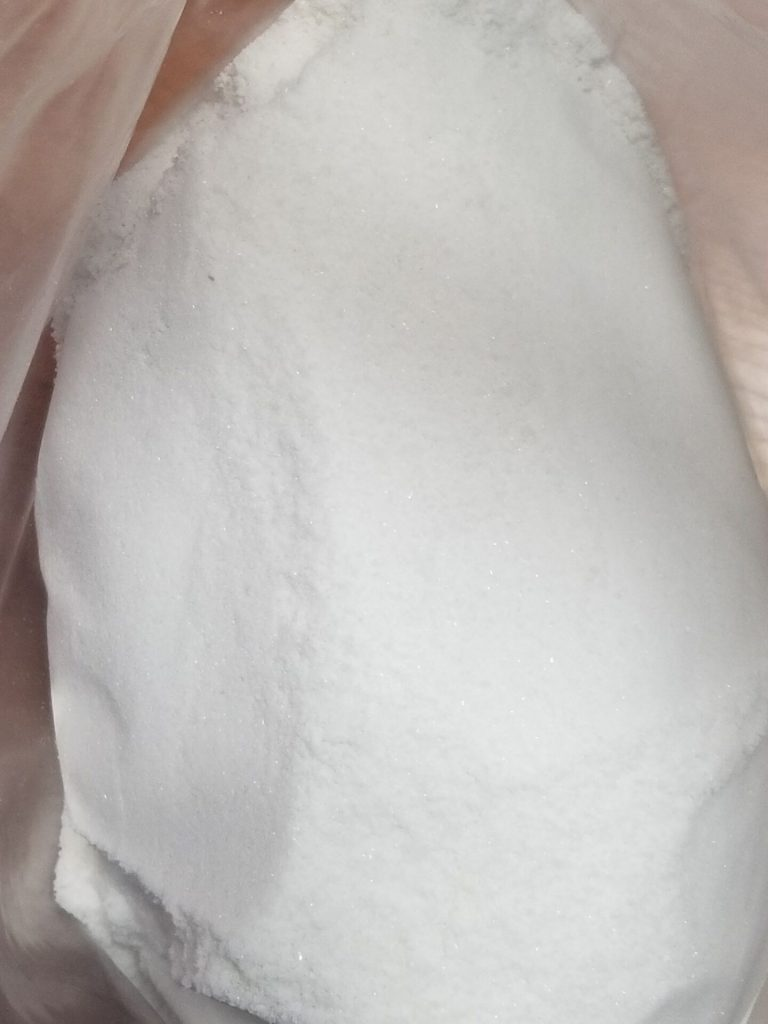
Buy 2-FDCK online |Wholesale 2-FDCK
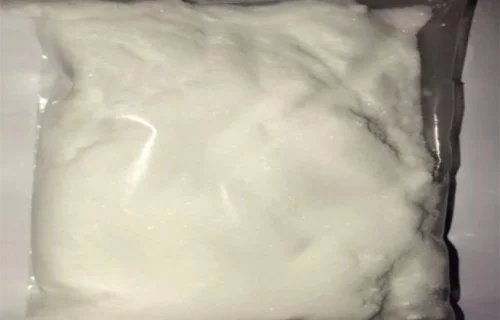
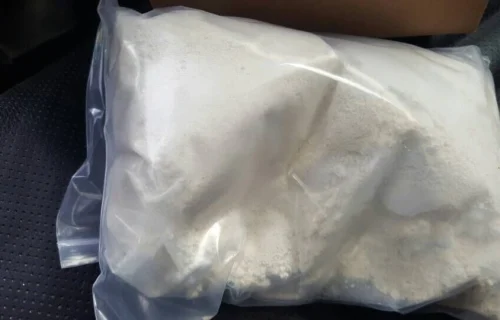
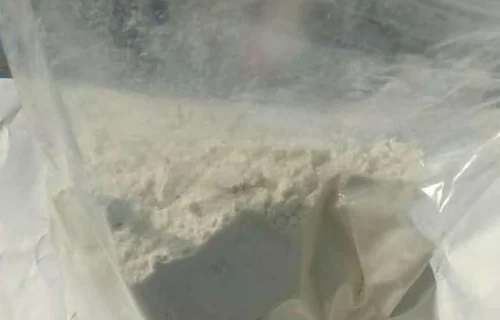
Buy 2-FDCK online at chemsaxis. 2-FDCK or 2-Fluorodeschloroketatamine is a new designer drug of the ketamine class and is dissociatives. 2-FDCK produced in modern laboratories in compliance with all standards.
Prix :
2-FDCK 10g 160 $ Ajouter au panier
2-FDCK 100g 690 $ Ajouter au panier Livraison gratuite!
2-FDCK 500g 1590 $ Ajouter au panier Livraison gratuite!
2-FDCK 1 kg 2190 $ Ajouter au panier Livraison gratuite!
2-FDCK 5 kg 4590 $ Ajouter au panier Livraison gratuite!
2-FDCK 10 kg 6590 $ Ajouter au panier Livraison gratuite!
2-FDCK est une nouvelle drogue de synthèse conçue pour la recherche et les applications médico-légales.
Propriétés toxicologiques et physiologiques de 2-FDCK n'ont pas été étudiés.
Conditions de conservation : dans un endroit frais et sec.
Durée de conservation : jusqu'à 2 ans dans de bonnes conditions de stockage.
Ne convient pas à la consommation humaine.

| Synonymes | 2-Fluoroketamine, Fluoroketamine, 2-FK, 2-FDCK, 2-Fl-2′-Oxo-PCM |
|---|---|
| UICPA | (R/S)-2-(2-fluorophenyl)-2-(methylamino)cyclohexanone |
| Formule | C13H16FNO |
| Poids moléculaire | 221.28 g·mol−1 |
| CAS | 111982-50-4 |
| Apparence | Crystalline |
| Pureté | > 99 % |
| Restriction | No |
-Choisissez vos produits préférés sur chemsaxis, et vous êtes assuré d'une excellente qualité au meilleur prix.
-Les enveloppes sont envoyées 24 heures après le paiement.
Délai de livraison : 3 à 4 jours ouvrables.
Livraison 100% dans toute l'Europe.
-Vous devez connaître le statut juridique du produit que vous commandez dans votre pays.
-Pour toute commande sur notre site à partir de 250 dollars américains, la livraison est à nos frais. Le gestionnaire exclut automatiquement les frais de livraison lors d'une commande passée sur $ 250.
2-Fluorodeschloroketamine (also known as 2′-Fl-2-Oxo-PCM, fluoroketamine, and 2-FDCK) is a dissociative anesthetic related to ketamine. Its sale and use as a designer drug has been reported in various countries. It is an analogue of ketamine where the chlorine group has been replaced by fluorine. Due to its recent emergence, the pharmacological specifics of the compound are mostly unclear, but effects are reported to be similar to its parent compound, ketamine.
History
The synthesis of 2-FDCK was first described in a 2013 paper as part of a larger effort to synthesize and evaluate new anesthetic drugs based on ketamine and its analogues. Ketamine itself was first introduced in 1964 and was approved for clinical use in 1970. Since then it has become one of the most important and applicable general anesthetics as well as a popular recreational drug.
The use of 2-FDCK as a research chemical has been reported in various countries. Many of these new psychoactive substances (NPS) appear on the drug market in order to circumvent existing drug policies. 2-FDCK was first formally notified by the EMCDDA in 2016, alongside 65 other new substances. Due to its recent appearance, little research has been done on the compound so far.
In January 2023, Israeli Biotech company “Clearmind Medicine Inc.” announced the successful completion of a preclinical study examining 2-FDCK in a rat model of depression, with the compound outperforming ketamine in longevity of antidepressant effect.
Chemistry
Structure
The full chemical name of 2-FDCK is 2-(2-fluorophenyl)-2-(methylamino)cyclohexan-1-one.

2-FDCK belongs to a class of compounds called arylcyclohexylamines which contains various other drugs such as PCP and ketamine. Their general structure consists of a cyclohexylamine unit with an aryl group attached to the same carbon as the amine. 2-FDCK has an o-fluorophenyl group as an aryl substituent and the amine group is methylated. The cyclohexyl ring features a ketone group next to the amine position.
The chemical structure of 2-FDCK differs from ketamine only in that there is a fluorine atom attached to the phenyl group. Ketamine has a chlorine atom in that position.
Synthesis
2-FDCK can be synthesized in a five-step reaction process. First 2-fluorobenzonitrile reacts with the Grignard reagent cyclopentyl magnesium bromide followed by a bromination reaction to obtain α-bromocyclopentyl-(2-fluorophenyl)-ketone. The reaction of the obtained ketone with methylamine at −40 °C then results in the formation of α-hydroxycyclopentyl-(2-fluorophenyl)-N-methylamine. Finally, the five-membered ring cyclopentanol form is expanded to a cyclohexylketone form by a thermal rearrangement reaction. HCl is used to create a water-soluble HCl salt of 2-FDCK.

 English
  Dutch
Dutch  German
  Chinese
  Italian
  Spanish
  Portuguese
  Russian
  French