
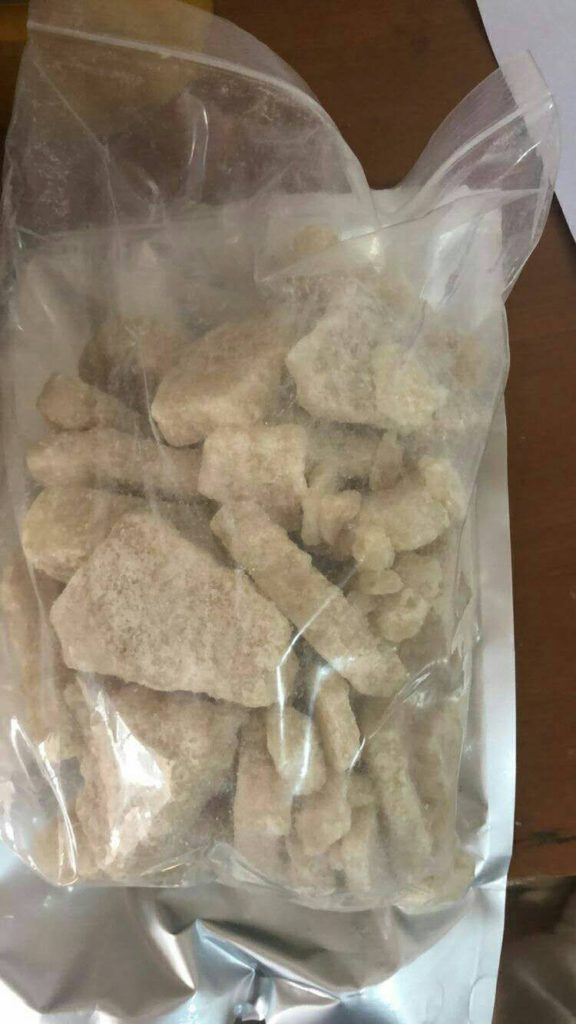
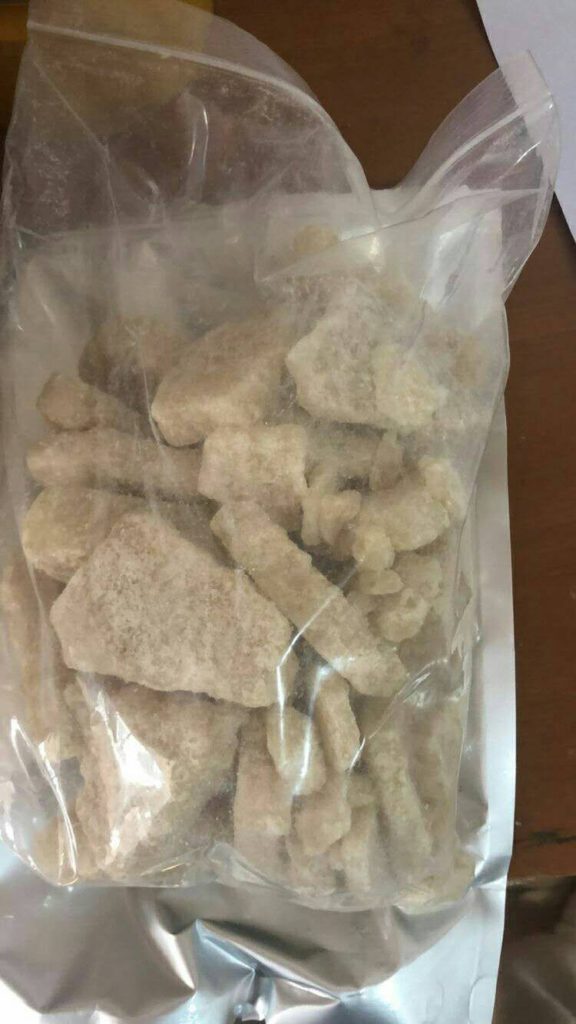
Buy Eutylone (802855-66-9) | Wholesale Eutylone (802855-66-9)
Looking to buy Eutylone? EUTYLONE scientifically classified as β-Keto-ethylbenzodioxolylbutanamine, belongs to the cathinone family, a group of beta-ketone amphetamines analogous to the naturally occurring khat plant alkaloids. Originating as a research chemical, Eutylone started gaining prominence in the late 2010s, primarily as an ingredient in designer recreational drugs. These drugs, often labeled as “bath salts” or other disguises, are not intended for human consumption, but their psychoactive effects have attracted those seeking alternative stimulants. Buy Eutylone at the best prices with secure delivery worldwide.
Price:
Eutylone 10g 100 $ Add to cart
Eutylone 100g 400 $ Add to cart Free shipping!
Eutylone 500g 1150 $ Add to cart Free shipping!
Eutylone 1 kg 1600 $ Add to cart Free shipping!
Eutylone 5 kg 3900 $ Add to cart Free shipping!
Eutylone 10 kg 5900 $ Add to cart Free shipping!
-Choose your favourite products from Chem Axis, and you are guaranteed excellent quality at the best price.
-Envelopes are sent 24 hours after payment.
Delivery time 3-4 business days.
100% delivery speed throughout Europe.
-You must know the legal status of the product you order in your country.
-When ordering on our website for 250 US dollars, delivery is at our expense. The manager automatically excludes shipping costs when ordering from $ 250.
The Chemistry Behind Eutylone
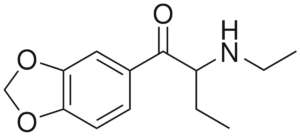
Eutylone is scientifically known as β-Keto-ethylbenzodioxolylbutanamine. This nomenclature, while complex, provides insights into the compound’s chemical structure and behavior.
The molecular structure of Eutylone closely mirrors that of MDMA (Ecstasy) and methylenedioxypyrovalerone (MDPV). This structural resemblance means that Eutylone can act on the brain’s neurotransmitter systems in ways similar to these drugs, though the exact mechanism of action, potency, and full spectrum of effects differ.
While Eutylone itself is a relatively new compound, the history of synthetic cathinones is extensive. The 1960s saw the first emergence of these synthetics, though the wave of popularity surged around 2009 when they began to be marketed aggressively as legal alternatives to established illicit drugs.
It’s crucial to note that the term “bath salts” in this context doesn’t refer to the products used in bathing. The name was merely a subterfuge to navigate legal restrictions and market the product more discreetly. As with other synthetic drugs, the exact composition of products sold as “bath salts” can vary, making their effects unpredictable and potentially hazardous.
|
Synonyms |
bk-EBDP Eutylone β-keto-Ethylbenzodioxolylbutanamine |
|
IUPAC |
1-(benzo[d][1,3]dioxo1-5-y1)-2-(ethylamino)pentan-1-one |
|
Formula |
C14H19NO3 |
|
Molecular weight |
249.31 g/mol |
|
CAS |
8492312-32-2 |
|
Appearance |
Crystals |
|
Purity |
≥ 99 % |
Molecular Structure:
Eutylone’s molecular formula is C13H17NO3. Structurally, it’s a beta-keto analog of MDMA. This means that while they share a common structural backbone, Eutylone has a ketone group (a carbonyl group bonded to a carbon atom) on its beta-carbon, which differentiates it from MDMA.
Relation to Cathinones:
Cathinones are naturally occurring compounds found in the khat plant (Catha edulis). They are essentially amphetamines with a ketone oxygen atom on the beta carbon. Eutylone, being synthetic, is modeled on this structural framework but with modifications, leading to its unique properties.
Receptor Binding:
While comprehensive receptor-binding profiles for Eutylone are still under investigation, it’s hypothesized that, like other synthetic cathinones, it affects the brain’s dopamine, serotonin, and norepinephrine levels. It works by inhibiting the reuptake of these neurotransmitters, thereby increasing their concentrations in the neural synapse, leading to stimulating and euphoric effects.
Metabolism:
Once ingested, Eutylone, like other synthetic cathinones, undergoes metabolism in the body. The primary metabolic routes involve demethylenation followed by methylation, or reduction of the ketone functional group, leading to various metabolites. These metabolic products can sometimes contribute to the compound’s psychoactive properties or toxicity.
Physical and Chemical Properties:
Eutylone generally appears as crystalline solids and has a molar mass of 235.28 g/mol. As a synthetic cathinone, its solubility, melting point, and other physicochemical characteristics can be influenced by the presence of impurities, which are common in designer drugs. These impurities can also affect its pharmacological and toxicological effects.
Isomers and Analogues:
The structural flexibility of synthetic cathinones means that Eutylone has various positional isomers and analogs. Each of these might exhibit different pharmacological properties.
In the world of organic chemistry, slight modifications can result in vastly different physiological effects. This is what makes Eutylone and its cousins both intriguing for research and challenging from a regulatory and safety perspective.
Global Responses and Emerging Patterns
By late 2021, global authorities began taking note. The World Health Organization, recognizing the menace of eutylone, recommended tighter controls over its international distribution. This led to the United Nations Commission on Narcotics Drugs putting international regulations in place by November 23, 2022. This stringent action might be influencing the drug market dynamics, with a noticeable surge in N,N-dimethylpentylone and a simultaneous decline in eutylone in 2022.
The Criticality of Understanding Exposures
To address the eutylone epidemic head-on, it’s pivotal to discern if the exposure to this synthetic cathinone is intentional or due to adulteration. With about 10% of eutylone-involved deaths showing evidence of MDMA usage but lacking its toxicology traces, unintentional exposure seems likely. The increasing trend of mixing stimulants like methamphetamine and cocaine further complicates matters.
Eutylone’s Effects on the Body
Understanding eutylone’s implications is essential, especially given its deceptive appearance and its potential for misuse. Like other psychoactive substances, eutylone can cause a wide range of physical and psychological effects that vary based on dosage, the individual’s physical condition, and whether other substances are used simultaneously.
Physical Effects
- Stimulation: Eutylone acts as a central nervous system stimulant. Users may experience heightened alertness and energy, similar to the effects of MDMA, cocaine, or methamphetamine.
- Increased Heart Rate and Blood Pressure: As with many stimulants, eutylone can elevate the heart rate and blood pressure, posing significant risks for individuals with underlying cardiovascular conditions.
- Dilated Pupils: The drug can cause pupils to enlarge, making them more sensitive to light.
- Hyperthermia: One of the concerning effects of eutylone is an increased body temperature or hyperthermia. If left unchecked, this can lead to muscle breakdown and renal failure, which are potentially fatal.
- Bruxism: Some users report grinding their teeth, a condition known as bruxism.
- Dehydration and Excessive Thirst: The stimulant nature of the drug can lead to dehydration. Consequently, users might experience excessive thirst and the need for frequent fluid intake.
Psychological Effects
- Euphoria: Many users consume eutylone seeking its euphoric effects, describing feelings of happiness, enhanced mood, and a sense of well-being.
- Increased Sociability: Some report feeling more outgoing and talkative, similar to other stimulants.
- Altered Perception: In some cases, users might experience mild hallucinations or changes in their perception of reality.
- Anxiety and Paranoia: Not all effects are desired. Eutylone can induce feelings of anxiety, restlessness, and, in higher doses, even paranoia.
- Compulsive Redosing: Due to its addictive potential, users might feel compelled to take more of the drug even before its effects wear off, increasing the risk of overdose.
Long-Term Effects and Risks
Chronic use of eutylone can lead to a host of issues. Dependency is a significant concern, with users developing a tolerance that necessitates higher doses for the same effect. Additionally, persistent use can cause cognitive deficits, mood disturbances, and cardiovascular complications. Notably, combining eutylone with other substances can exponentially increase its risks, leading to unpredictable and potentially fatal outcomes.
It’s crucial to recognize the potential harms of eutylone, especially given its rapid proliferation in the drug market. As always, the best defense is informed awareness and caution.
Differentiating Eutylone from Other Drugs
Given the alarming rise in eutylone’s availability and the dangerous consequences of its mistaken identity, it is paramount to discern eutylone from other similar substances. This section will shed light on some of the significant differences and the challenges posed by the mimicry of more well-known drugs.
Physical Appearance:
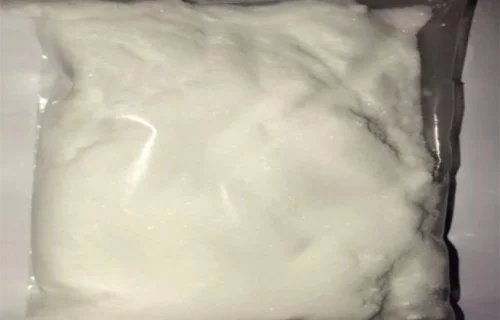
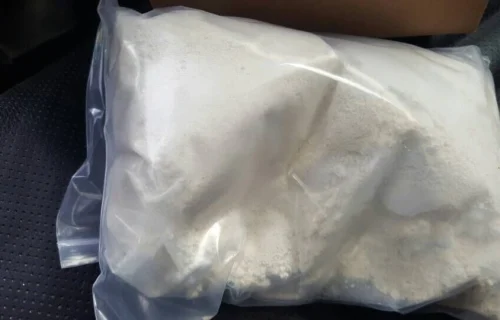
Form: Eutylone often presents itself in crystalline form, similar to other synthetic cathinones. Its crystals can vary in color, but they typically appear as white or off-white chunks.
Tablets and Capsules: When sold as a counterfeit for other drugs, eutylone might be compacted into pill or capsule form. Without specialized testing, distinguishing these from genuine MDMA or other substances by appearance alone can be challenging.
Quantitative Evidence for Procuring Eutylone over Analogs
Analytical Specificity: Baseline Chromatographic Separation from Key Isomers
In forensic analysis, baseline separation of isomers is critical. Under a validated LC-QTOF-MS method, Eutylone is clearly resolved from its common structural isomers. The retention time for Eutylone was reported as 4.66 minutes, which is distinct from the retention times of dibutylone (3.455 min) and pentylone (4.014 min) under identical conditions, ensuring unambiguous identification.
| Evidence Dimension | LC-QTOF-MS Retention Time |
| Target Compound Data | 4.66 min |
| Comparator Or Baseline | Pentylone: 4.014 min; Dibutylone: 3.455 min |
| Quantified Difference | Separated by >0.64 min from Pentylone and >1.2 min from Dibutylone |
| Conditions | LC-QTOF-MS with Phenomenex Kinetex C18 column (50 mm x 3.0 mm, 2.6 µm) and specified gradient. |
This chromatographic separation is essential for any laboratory needing to definitively identify Eutylone and distinguish it from co-occurring, structurally similar controlled substances.
Differentiated Pharmacological Profile: Monoamine Transporter Interaction
Eutylone exhibits a distinct monoamine transporter interaction profile compared to its isomers. While Eutylone, Pentylone, and Dibutylone show nearly identical potency for inhibiting dopamine transporters (DAT IC50 ≈ 120 nM), their effects on serotonin transporters (SERT) diverge significantly.[5] Eutylone and Pentylone inhibit SERT uptake and act as partial SERT releasers, whereas Dibutylone has no significant effect on SERT uptake or release.[5][9] Specifically, Eutylone is a slightly more potent SERT inhibitor than Pentylone.[8]
| Evidence Dimension | Serotonin Transporter (SERT) Uptake Inhibition |
| Target Compound Data | Full inhibitor and partial releaser (approx. 50% of maximal response) |
| Comparator Or Baseline | Dibutylone: No inhibition or release activity; Pentylone: Full inhibitor and partial releaser (similar to Eutylone but slightly less potent as an inhibitor) |
| Quantified Difference | Qualitatively different mechanism vs. Dibutylone (inhibitor/releaser vs. inactive); quantitatively more potent inhibitor vs. Pentylone. |
| Conditions | In vitro [3H]5-HT uptake and release assays in rat brain synaptosomes. |
For neuropharmacological studies, this specific ‘hybrid’ activity (DAT/NET inhibition with SERT partial release) distinguishes Eutylone’s mechanism, making it a required tool for research into this functional class, as data from the SERT-inactive Dibutylone would be irrelevant.
Handling & Stability: Suitability for Standard Preparation
Eutylone, as a hydrochloride salt, is soluble in water, methanol, ethanol, DMF, and DMSO, facilitating its use in preparing stock solutions for analytical workflows.[5] Studies on the stability of synthetic cathinones in biological matrices have shown that methylenedioxy-substituted cathinones, including Eutylone, are more stable in urine and blood compared to other structural classes.[5] For instance, in a stability study in urine stored at 25°C, Eutylone concentration remained above 80% of its initial value for over 7 days, a critical factor for reproducibility in toxicology labs where sample integrity over time is paramount.[8]
| Evidence Dimension | Stability in Urine at 25°C |
| Target Compound Data | >80% remaining after 7 days |
| Comparator Or Baseline | General class of synthetic cathinones (some of which are less stable) |
| Quantified Difference | Higher stability compared to non-methylenedioxy substituted cathinones. |
| Conditions | Analyte spiked in urine, stored at 25°C, analyzed by LC-MS/MS. |
The documented solubility and superior stability of the methylenedioxy group provide confidence in the integrity of stock solutions and the reliability of analytical results, reducing the risk of analyte degradation and experimental variability.
Procurement Rationale: Why Eutylone is Not Interchangeable with Its Isomers
Substituting Eutylone with its structural isomers, such as pentylone or dibutylone, is invalid for analytical and research applications due to critical differences in their physicochemical and pharmacological properties. Small modifications in the alkyl chain and amine substituents result in distinct chromatographic retention times and mass fragmentation patterns, making co-identification impossible without a specific, certified Eutylone standard. Furthermore, these structural variations lead to demonstrably different interactions with biological targets like monoamine transporters, meaning data generated with an analog cannot be reliably extrapolated to Eutylone. For legally defensible forensic identification and reproducible pharmacological research, the use of the exact, specified compound is non-negotiable.
Chem Axis lets you buy research chemicals containing Eutylone directly from our website. Before they are made available for sale, all of our research chemicals have been thoroughly tested. This is how we ensure high-quality ED-DB products. We are happy to answer your questions or provide more information.

References
- [1] Glatfelter, G. C., et al. (2021). Eutylone and Its Structural Isomers Interact with Monoamine Transporters and Induce Locomotor Stimulation. ACS Chemical Neuroscience, 12(7), 1170–1177.
- [2] Lin, H.-Y., et al. (2023). Comparative Assessment of the Addictive Potential of Synthetic Cathinones by Zebrafish Conditioned Place Preference (CPP) Paradigm. International Journal of Molecular Sciences, 24(13), 11082.
- [3] Krotulski, A. J., et al. (2020). Eutylone Intoxications—An Emerging Synthetic Stimulant in Forensic Investigations. Journal of Analytical Toxicology, 45(8), 833-844.
- [4] Critical Review Report: EUTYLONE. (2021). Expert Committee on Drug Dependence, Forty-fourth Meeting, World Health Organization.
- [5] Glatfelter, G. C., et al. (2021). Eutylone and Its Structural Isomers Interact with Monoamine Transporters and Induce Locomotor Stimulation. ACS Chemical Neuroscience, 12(7), 1170–1177.
1-(1,3-Benzodioxol-5-yl)-2-(ethylamino)butan-1-one (Eutylone) (Street Names: “Bath salt,” bk-EBDB). (2023, April). DEA Diversion Control Division (.Gov). https://www.deadiversion.usdoj.gov/drug_chem_info/eutylone.pdf
Gladden, R. M., Chavez-Gray, V., O’Donnell, J., & Goldberger, B. A. (2022). Notes From the Field: Overdose Deaths Involving Eutylone (Psychoactive Bath Salts) — United States, 2020. Morbidity and Mortality Weekly Report, 71(32), 1032–1034. https://doi.org/10.15585/mmwr.mm7132a3
Ethylone – Alcohol and Drug Foundation. (n.d.). https://adf.org.au/drug-facts/ethylone

 English
  Dutch
Dutch  German
  Chinese
  Italian
  Spanish
  Portuguese
  Russian
  French