
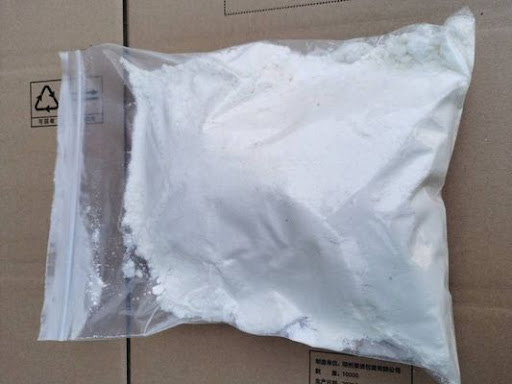
Buy MDMB-4en-PINACA | Wholesale MDMB-4en-PINACA
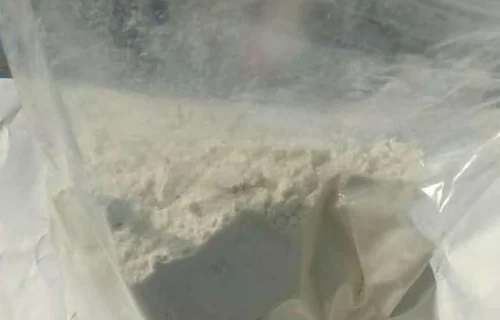
Buy MDMB-4en-PINACA (also incorrectly known as 5-CL-ADB-A), which is an indazole-based synthetic cannabinoid that has been sold online as a designer drug. MDMB-4en-PINACA was first identified in Europe in 2017. In 2021, MDMB-4en-PINACA was the most common synthetic cannabinoid identified by the Drug Enforcement Administration in the United States. MDMB-4en-PINACA differs from 5F-MDMB-PINACA due to replacement of 5-fluoropentyl with a pent-4-ene moiety (4-en).
Price:
MDMB-4en-PINACA 10g 90 $ Add to cart
MDMB-4en-PINACA 50g 165 $ Add to cart
MDMB-4en-PINACA 100g 260 $ Add to cart
MDMB-4en-PINACA 500g 670 $ Add to cart Free shipping!
MDMB-4en-PINACA 1 kg 1200 $ Add to cart Free shipping!
MDMB-4en-PINACA 5 kg 2400 $ Add to cart Free shipping!
MDMB-4en-PINACA 10 kg 3700 $ Add to cart Free shipping!
MDMB-4en-PINACA partially follows the cannabinoid naming scheme of LinkedGroup–TailChain–Core–Linker, where:
- MDMB stands for Methyl DiMethyl Butanoate, the linked group.
- 4en stands for 4–en-1-yl, part of the carbon chain.
- PINACA stands for Pentyl-1H-INdAzole-3-CarboxAmide, the core group and linker.
Pharmacology
It acts as a potent agonist of the CB1 receptor with an EC50 value of 2.47 nM. MDMB-4en-PINACA has been reported to be approximately 2.5x to 3x+ (2.47 nM, 239%) stronger (by CB1 activated β-arrestin 2 recruitment) than JWH-018 (25.3 nM, 100%) with over 10x the binding affinity than JWH-018 in vitro.
In a review of in vitro MDMB-4en-PINACA studies showed an EC50 of 1.88–2.47 nM, an Emax of 221–299% (compared to JWH-018), and a Ki value of 0.28nM on the CB1 receptor and appears to be 7x more selective for the CB2 receptor over the CB1 receptor. MDMB-4en-PINACA has an in vitro half-life of approximately 10 minutes but has been reported in human urine samples up to an hour after consumption, producing 14 metabolites which may have their own pharmacological activity and be used in identification of MDMB-4en-PINACA consumption
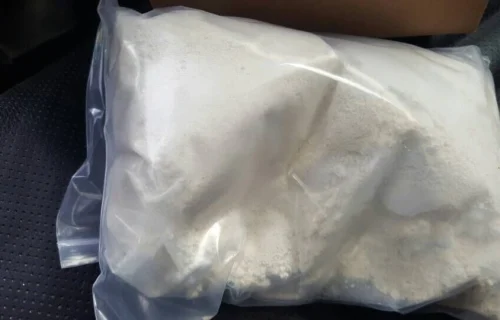
MDMB-4en-PINACA is a new designer drug designed for research and forensic applications.
Toxicological and physiological properties of MDMB-4en-PINACA have not been studied.
Storage conditions: in a cool and dry place. Storage time: up to 2 years subject to proper storage conditions.
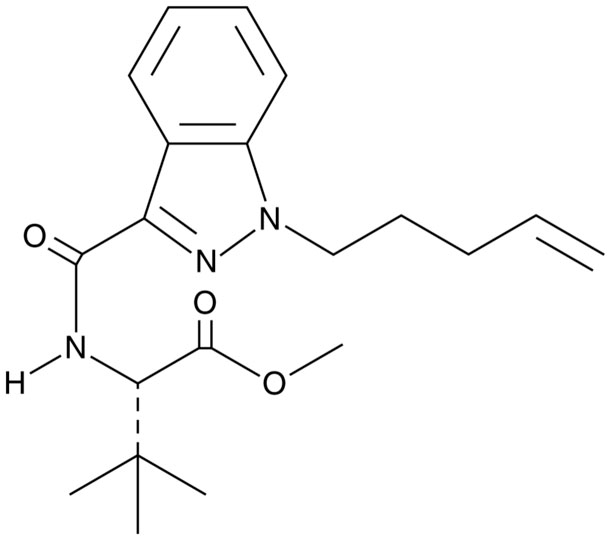
| Synonyms | MDMB-4en-PINACA |
|---|---|
| IUPAC | N-(1-carbamoyl-2,2-dimethylpropyl)-1-(pent-4-enyl)-1H-indazole-3-carboxamide |
| Formula | C19H26N4O2 |
| Molecular weight | 342.44 |
| CAS | |
| Appearance | powder |
| Purity | ≥98% |
-Choose your favorite products from chemsaxis, and you are guaranteed excellent quality at the best price.
-Envelopes are sent 24 hours after payment. Delivery time 3-4 business days. 100% delivery speed throughout Europe.
-You must know the legal status of the product you order in your country.
-When ordering on our website from 250 US dollars, delivery at our expense. The manager automatically excludes shipping costs when ordering from $ 250.
MDMB-PINACA: Quantitative Evidence for Procurement Decisions
Defining a Potency Baseline: Differentiating from the Unsaturated Analog MDMB-4en-PINACA
MDMB-PINACA serves as the saturated pentyl-chain baseline for a family of highly potent analogs. The introduction of a terminal double bond in the tail, creating MDMB-4en-PINACA, results in exceptionally high CB1 receptor potency. In a cAMP accumulation assay, MDMB-4en-PINACA demonstrated a half-maximal effective concentration (EC50) of 0.33 nM. [1] This establishes that even subtle changes to the tail’s saturation state can dramatically impact functional activity, making the selection of the specific saturated compound, MDMB-PINACA, a critical variable for achieving predictable and comparatively lower, yet still potent, receptor modulation.
| Evidence Dimension | CB1 Receptor Functional Potency (cAMP accumulation) |
| Target Compound Data | Not directly measured in cited study; serves as the saturated baseline for comparison. |
| Comparator Or Baseline | MDMB-4en-PINACA: EC50 = 0.33 nM |
| Quantified Difference | The unsaturated analog exhibits sub-nanomolar potency, highlighting the functional impact of the tail structure. |
| Conditions | In vitro cAMP accumulation assay in cells expressing human CB1 receptors. |
For researchers investigating structure-activity relationships, procuring the specific saturated analog MDMB-PINACA is essential for establishing a baseline against which unsaturated or fluorinated analogs are compared.
Metabolic and Handling Instability: Ester Hydrolysis in Biological Matrices
A critical procurement consideration for MDMB-PINACA and its analogs is their inherent instability in biological samples. The closely related and widely studied 5F-MDMB-PINACA (5F-ADB) degrades completely to its corresponding 3,3-dimethylbutanoic acid metabolite in whole blood within 24 hours at room temperature and within 7 days under refrigeration (4°C). [1] In contrast, the metabolite itself is stable under all tested storage conditions. This rapid, non-enzymatic hydrolysis of the methyl ester is a class-wide property. Therefore, researchers procuring MDMB-PINACA must account for this degradation in experimental design, sample handling, and storage to ensure accurate quantification of the parent compound.
| Evidence Dimension | Stability in Whole Blood |
| Target Compound Data | Expected to be unstable based on class behavior. |
| Comparator Or Baseline | 5F-MDMB-PINACA: >99% degradation after 24h at room temp; >99% degradation after 7 days at 4°C. Its primary metabolite is stable. |
| Quantified Difference | The parent compound is highly unstable in biological matrices, while its primary ester hydrolysis metabolite is stable. |
| Conditions | Compound stored in fortified whole blood at room temperature, 4°C, and -20°C. |
This evidence directly impacts procurement and experimental protocols; buyers must choose between the unstable parent compound for specific studies or the stable primary metabolite for others, and must implement strict, cold-chain handling procedures for the parent.


 English
  Dutch
Dutch  German
  Chinese
  Italian
  Spanish
  Portuguese
  Russian
  French